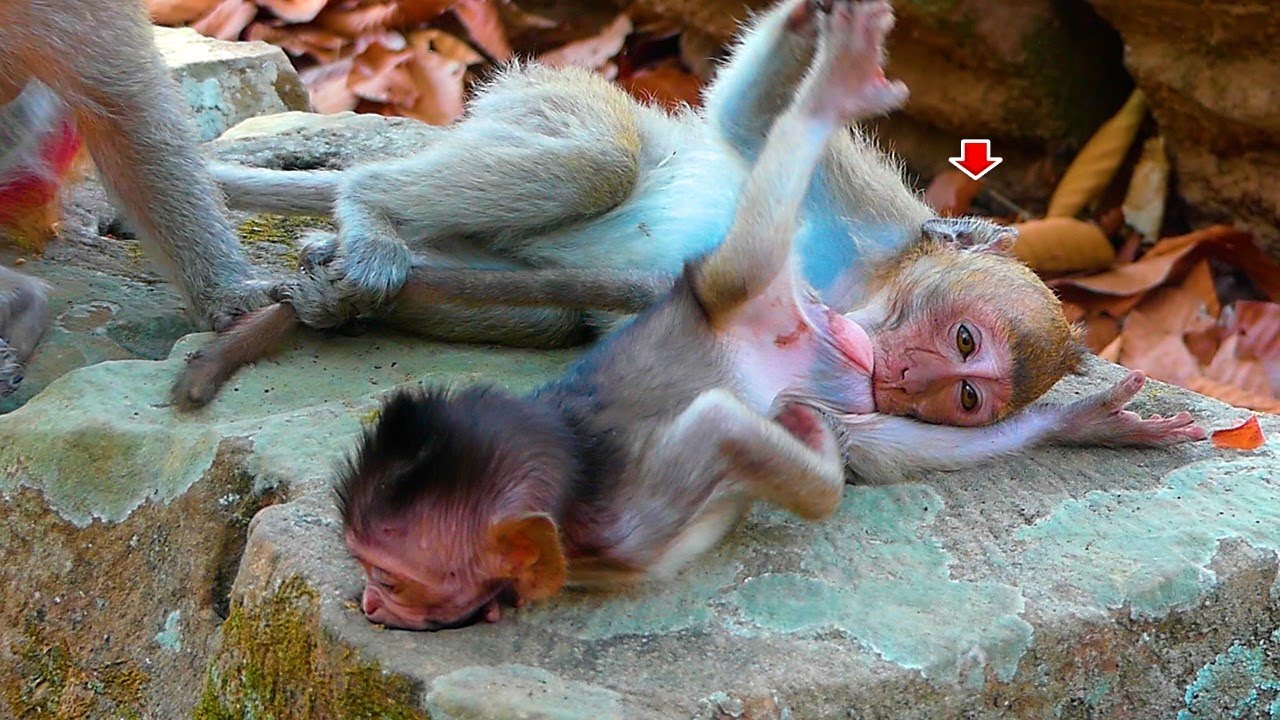
Early in the morning, before most visitors arrived, the Angkor forest felt unusually peaceful. Soft sunlight filtered through tall trees while birds called from the canopy above. The ancient stones of Angkor Wat seemed almost timeless, quietly watching another ordinary day unfold. Then something special happened. Near one of the shaded pathways, a small troop of long-tailed macaques gathered closer than usual. Their movements slowed. Adult monkeys that had been searching for food paused for a moment, turning their attention toward one young mother sitting comfortably beneath the roots of a large tree. Carefully held against her chest was a newborn baby. The tiny infant barely moved at first. Its eyes remained mostly closed while its little fingers instinctively wrapped around its mother’s fur. Every few moments, the mother gently adjusted her arms, making sure the baby remained warm and secure. Nothing about the scene felt dramatic. Instead, it felt deeply familiar. Parents from every part of the world understand this quiet kind of care. Whether in a city hospital or beneath the trees of an ancient Cambodian forest, the first hours of a new life often look remarkably similar. Other members of the troop approached slowly. One older female stopped several feet away, watching quietly before continuing on her way. A young juvenile seemed curious but respectfully kept its distance after receiving a calm glance from the mother. The forest itself appeared to slow down. Leaves moved gently in the morning breeze. Sunlight shifted across weathered stones that have stood for centuries. Visitors walking nearby often smiled without saying much, sensing they were witnessing a peaceful moment rather than a performance. For wildlife observers, these early family interactions are fascinating. Newborn macaques depend entirely on their mothers during the first weeks of life. Constant physical contact provides warmth, security, and opportunities to nurse. As the days pass, curious little faces begin looking out into the world, gradually becoming more adventurous while always returning to the safety of their mother’s embrace. Watching these natural behaviors reminds us how closely many social mammals care for their young. There were no loud sounds. No rushing. Only patience. The mother occasionally groomed the baby’s tiny head while calmly watching the rest of the troop move through the forest. Nearby juveniles continued playing among fallen branches, while experienced adults quietly searched for food beneath the trees. Life continued naturally. As the morning became brighter, more visitors arrived. Some noticed the family from a respectful distance and paused only briefly before continuing their walk through Angkor Wat. The newborn remained peacefully asleep for most of the morning. Its world was still very small. Warm arms. Soft fur. Gentle breathing. The safety of its mother. In a place visited by millions each year for its remarkable history, moments like these quietly remind us that Angkor is also home to thriving wildlife communities whose stories continue every single day. Sometimes the most memorable moments are also the quietest. Perhaps that is why so many people stop for just a few seconds, smile, and walk away carrying the memory with them long after leaving the forest.
A Tiny New Life Begins Under the Ancient Trees